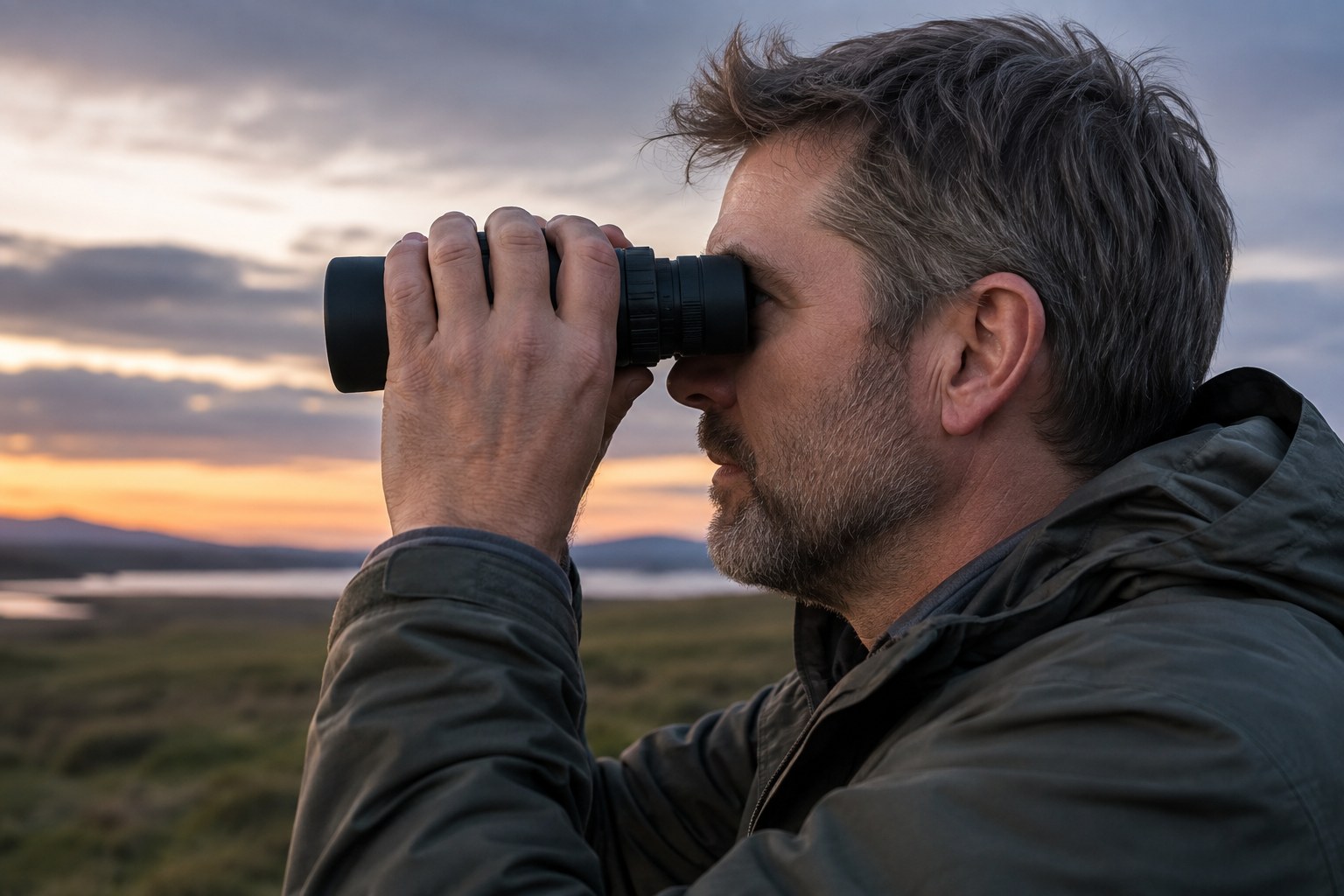
Night viewing places unusual demands on the eyes. A scene may be dim, details may be low in contrast, and the observer may spend longer looking through the instrument than expected. In those conditions, a binocular’s headline magnification or sensor resolution tells only part of the story. The way the image reaches the eyes matters just as much.
Eye relief, exit pupil, diopter adjustment, and interpupillary distance are practical parts of that experience. They affect whether the full image is easy to see, whether both eyes can work comfortably, and whether fine detail remains usable after several minutes. These terms can sound technical, but each describes a straightforward relationship between the binocular and the person using it.
Eye Relief: Keeping the Full Image in View
Eye relief is the distance between the eyepiece and the position where the eye receives the complete image. Longer eye relief gives the observer more room to place the eyes while still seeing the entire circular field of view.
This is especially important for anyone who wears glasses. Spectacle lenses hold the eyes farther from the eyepieces, so a short-relief design may show a narrowed field, dark corners, or a black ring around the image. Folding or adjustable eyecups can help by setting the eyepiece at a more suitable distance. Glasses wearers should normally use the eyecups in their retracted position, though the exact adjustment depends on the instrument and the observer.
Eye relief is not simply a matter of comfort. If the eye is too far away, it becomes harder to hold the correct viewing position. The image may appear to shift or disappear when the binocular moves slightly. If the eye is pressed too close, eyelashes, glasses, or facial contact can become distracting. A comfortable position makes it easier to observe quietly and steadily rather than constantly repositioning the binocular.
Exit Pupil and the Brightness Reaching the Eye
The exit pupil is the small circle of light visible behind the eyepiece when the binocular is held a short distance from the face. It is the image of the instrument’s front opening as formed by the optical system. In practical terms, it indicates how much light is being presented to the eye.
A larger exit pupil can make it easier to place the eyes correctly and can support a more relaxed view in dim conditions. A smaller one demands more precise alignment. That does not mean a large exit pupil automatically produces a better nighttime image. The eye must be able to use the available light, and the result also depends on lens quality, coatings, internal reflections, focus, atmospheric conditions, and the brightness of the scene.
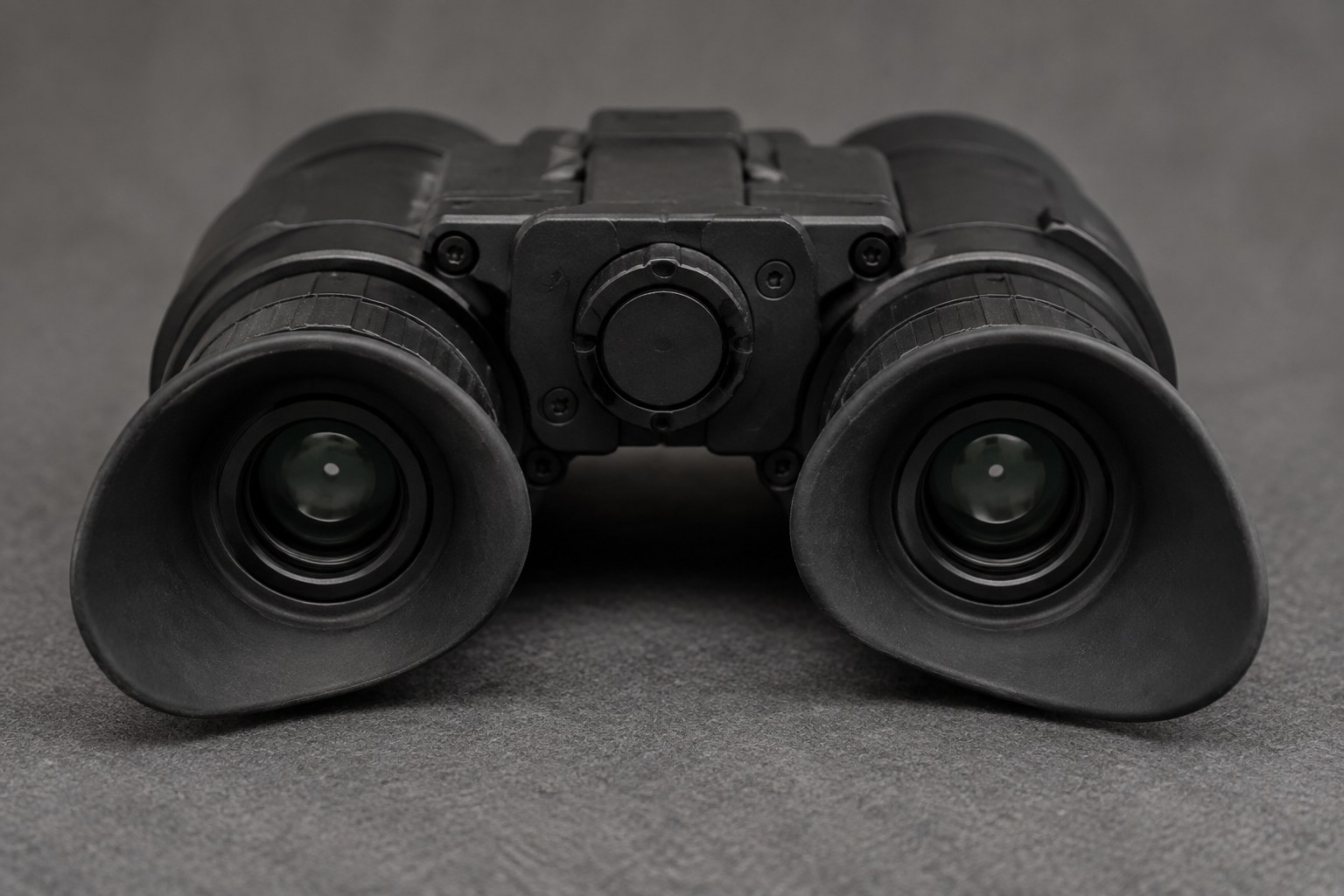
For optical binoculars, exit pupil is related to the front lens diameter and magnification: increasing magnification while keeping the front lens the same generally makes the exit pupil smaller. This is one reason high magnification can feel less forgiving after dark. A large, bright-looking image is not necessarily a detailed one, and a larger front lens can add weight without solving every other optical limitation.
Digital night vision binoculars present the scene differently. Their sensor gathers light, processes the signal, and sends an image to an electronic display. They do not have an exit pupil in exactly the same optical sense as a conventional binocular. The eyepiece still has an eye-relief position, but apparent brightness, contrast, noise, and usable detail are also shaped by display settings, gain, processing, and the sensor’s performance. Comparing exit-pupil figures between optical and digital instruments can therefore be misleading.
Diopter Adjustment: Matching Each Eye
Most people’s eyes do not focus in precisely the same way. A diopter adjustment compensates for that difference. It is usually a ring near one eyepiece, separate from the central focus wheel. The central wheel changes focus for both sides together; the diopter fine-tunes one side so each eye receives a sharp image.
A sensible adjustment starts with a distant, detailed subject in safe and lawful surroundings. Cover one objective lens or close one eye, focus the visible side with the central wheel, and then switch sides without changing the central focus. Use the diopter ring to sharpen the second image. Reopen both eyes and make only small corrections with the central wheel if needed. The markings on the diopter ring are reference points, not a guarantee that a particular setting will suit another observer.
It is worth taking time with this step. If one eye is working harder than the other, the view may seem acceptable at first but become tiring, strained, or slightly blurred during a longer observation. Diopter adjustment cannot correct every vision issue, and it does not replace an eye examination. It simply helps the binocular accommodate normal differences between the eyes.
Interpupillary Distance: Bringing Two Views Together
Interpupillary distance, often shortened to IPD, is the distance between the centers of the observer’s pupils. Binoculars use two optical paths, so the eyepieces must line up with both eyes. The barrels usually hinge inward and outward to set this spacing.
To adjust IPD, look through the instrument and move the barrels until the two circular images merge into one. When the spacing is correct, the view should feel natural rather than like two overlapping windows. Incorrect spacing can create dark edges, a narrow field, or a sense that the eyes are being asked to diverge or converge unnaturally.
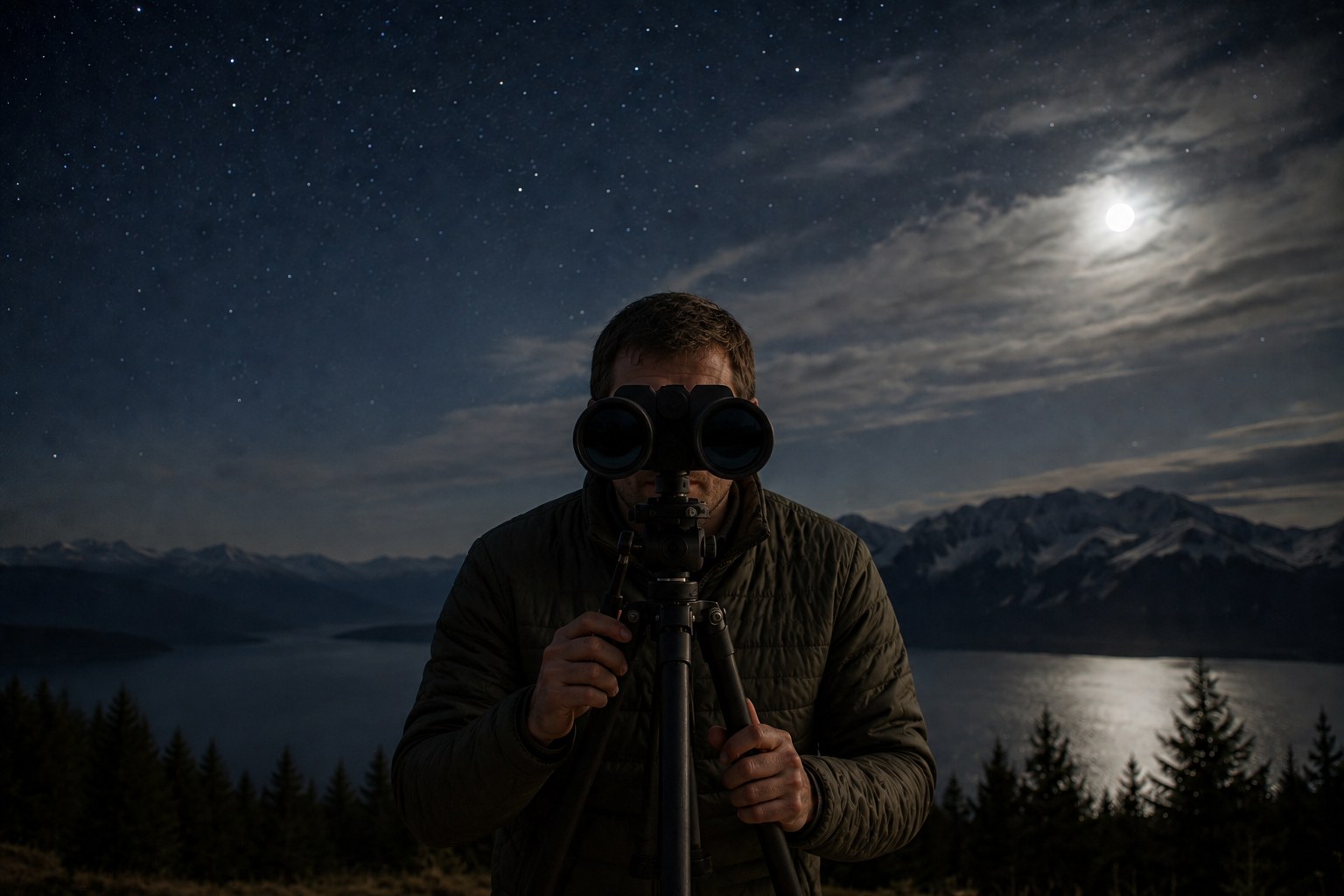
IPD is separate from focus and diopter adjustment. A well-focused binocular can still be uncomfortable if the eyepieces are too far apart or too close together. Set the spacing first, then adjust the diopter and focus. If more than one person uses the binocular, each observer may need to repeat these settings.
Optical Binoculars and Digital Displays Feel Different
With a traditional optical binocular, the view is formed by lenses and prisms and reaches the eyes directly. Eye placement, exit pupil, focus, and optical alignment strongly influence the experience. Small movements can reveal or hide the image when eye relief is short or the exit pupil is small.
A digital unit adds a sensor, processor, and display. The display may remain visible across a different range of eye positions, but that does not remove the importance of eye relief. An eyepiece that is poorly positioned can still cause discomfort, limit the apparent field, or make the image difficult to see. Digital systems may also show processing artifacts, delayed movement, grain, or reduced tonal detail in very dark scenes. A brighter screen is not automatically a more informative image.
When comparing the two types, judge the whole viewing experience rather than borrowing one specification from one category and applying it to the other. Ask whether the image can be acquired quickly, whether fine detail remains stable, and whether the eyes stay relaxed during a sustained look.
Making Night Observation More Comfortable
Begin by setting the binocular before the important observation starts. Adjust the IPD, diopter, eyecups, and focus under a moderate amount of available light. Keep the instrument steady with both hands, but avoid forcing the face against the eyepieces. A neck strap or supported posture can reduce tension during longer sessions.
Give the eyes occasional breaks, particularly when using a digital display. Avoid looking directly at bright lights through any binocular, and be considerate of nearby people and properties. Night observation should not involve entering restricted areas, identifying private activity, or using an optical instrument while driving or moving through hazardous terrain. If equipment is being carried outdoors, keep it secured and separate from any weapon; binoculars are for observation, not targeting or tactical use.
The most useful binocular is one that allows a stable, complete, and comfortable view for the conditions at hand. Eye relief helps maintain that view, exit pupil describes how the optical system presents light, diopter adjustment balances the two eyes, and IPD brings the instrument into line with the observer’s face. Understanding those relationships makes it easier to choose and use night vision binoculars with realistic expectations.